

The West Highland Line
Ride the Caledonian Sleeper and both branches of the famed West Highland Line, one of the world's most scenic railroads.
Travel by night
Journal
Scotland has long captivated travelers, but what do you need to know before you visit? Read our guide to visiting Scotland covering where and when to go, things to see and do, and how to get around.
Journal
Powered by two million miles of expertise
Our price includes all transport, accommodation and a personalized itinerary for your trip. Byway's travel experts are also available on WhatsApp throughout for disruption support and travel tips.
No, flights to Europe aren't included, but all transport and accommodation once you're here is. Short-haul flights are highly carbon-intensive, and traveling around Europe by train, ferry or bus is an easy, enjoyable alternative.
Yes. Different hotel options are available to choose from on the trip page, and any room upgrade requests can be added in the booking form. Our team will then find upgrade options and discuss them with you.
No. If you'd like to leave Europe from a different city, our concierge team can build you a custom one-way trip.
Yes. Prices on our trip pages are shown in your local currency by default, or you can select your preferred currency, including USD, CAD, EUR or CHF, from the dropdown in the top right corner of the trip page. The payment page will always show the price in your chosen currency.
You can generally bring as much luggage as you can carry, as long as it fits in the luggage racks or overhead space. On Eurostar, UK and most European trains, the standard allowance is two large bags and one smaller item, provided you can manage them yourself; let us know in advance if you're planning to bring anything oversized. Since you may need to change stations or walk to hotels, packing light makes the journey more comfortable.
Most European train tickets are digital and sent to you by email. A few, including tickets for Spain, Portugal and some EuroCity trains, require paper tickets, which can be mailed to a hotel on your itinerary.
No, Byway trips are self-guided, not part of a group tour. You'll have on-demand personalized support by WhatsApp, text or phone throughout, so all the planning and booking is done for you, and any disruptions are handled without you having to worry about them.
The best time to visit Scotland is late March to June, or September and October, when the weather is mild and prices and crowds in hotspots like Skye and Edinburgh are lower than the peak summer months of July and August. Each season has its own highlights: puffins return to the coast in spring, the Highland Games take place in summer, autumn is the best time to see salmon leaping upriver, and winter brings Christmas markets, Hogmanay celebrations. and Burns Night on January 5th. Ferry crossings to the Scottish Islands can also be disrupted by heavy winds in the off-season.
The best things to do in Scotland include riding scenic train routes like the West Highland Line, whisky tasting in Speyside, and hiking the Cairngorms.
Riding the West Highland Line, previously voted the world's most scenic railway, from Glasgow to Oban or Fort William/Mallaig
Travelling along the Kyle Line through the Highlands to Skye, past ancient mountains, fishing villages and coastline, then exploring Skye's Fairy Pools and the Quiraing
Taking the Far North Line to the UNESCO-listed Flow Country, and surfing at Thurso, home to some of Europe's best cold-water waves
Sleeping aboard the Caledonian Sleeper between London and the Highlands
Whisky tasting at Speyside distilleries including Glenfiddich, Macallan and Glenlivet
Watching dolphins and grey seals at Chanonry Point near Inverness, or from the Whale and Dolphin Conservation centre at Fortrose
Hiking in the Cairngorms National Park, or taking the funicular to the UK's highest restaurant at Cairngorm Mountain Resort
Marvelling at the well-preserved Neolithic settlement of Skara Brae on Orkney, or standing amongst ancient standing stones like Calanais on the Isle of Lewis
Watching the Highland Games in towns throughout summer, from Dunoon's Cowal Gathering to the royal-attended Braemar Gathering and the historic Atholl Gathering at Blair Castle
Taking the ferry from Mallaig to Inverie on the Knoydart Peninsula to visit the Old Forge, the UK's most remote pub
Exploring Edinburgh's Royal Mile and National Gallery, climbing Arthur's Seat, or catching a show at the Edinburgh Fringe
Island-hopping from Oban to Mull, then Iona for its ancient abbey and white sand beaches, Staffa for the basalt columns and puffin colonies of Fingal's Cave
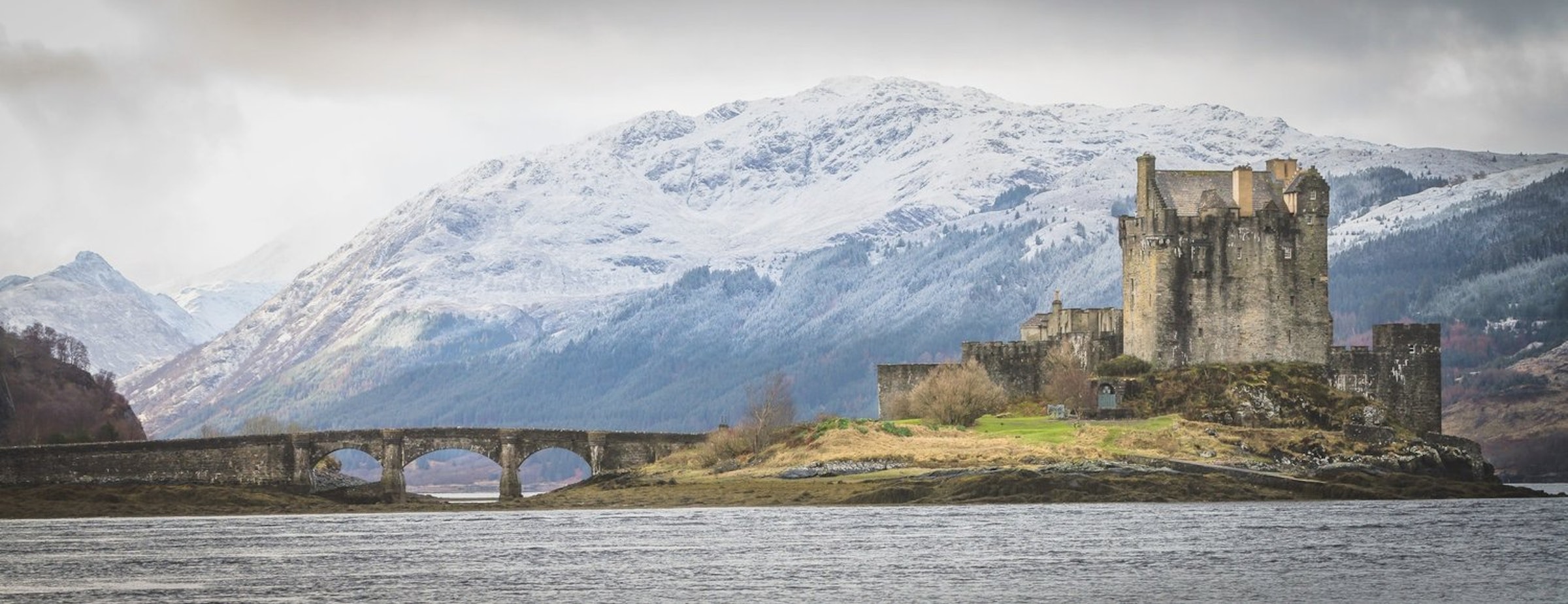
Touring castles from the cliff-top ruins of Dunnottar to the island fortress of Eilean Donan, well-preserved Stirling Castle, and Balmoral, the Highland retreat of the British royal family
Visiting haunting historic sites including Culloden, where the last Jacobite rising ended in 1746, and Glencoe, scene of the 1692 massacre of Clan MacDonald
Scotland is reachable by the Caledonian Sleeper, running from London to Inverness, Fort William and Edinburgh. Daytime trains connect Scotland with cities across the rest of the UK, and ferries from Europe to Newcastle link up with onward train connections. Within Scotland, an extensive rail network connects towns and cities, with coach and local bus services covering areas without rail links, and ferries connecting to the islands.
Yes. The Caledonian Sleeper runs six nights a week (excluding Saturdays) from London Euston, Crewe and Preston to destinations including Inverness, Fort William and Perth. Byway trips use classic private rooms with bunk beds and a shared bathroom as standard, with upgraded rooms checked for availability before booking. Get in touch for a custom itinerary.
Scotland's top scenic train routes include the Far North Line, the West Highland Line, and the Kyle Line.
The West Highland Line, previously voted the world's most scenic railway, runs on two branches from Glasgow to Oban, or to Fort William and Mallaig
The Far North Line runs from Inverness to Wick and Thurso, passing tiny Highland stations and clinging to the coastline
The Kyle Line runs from Inverness to Kyle of Lochalsh, cutting through remote areas of the Highlands past ancient mountains and fishing villages on the west coast
The Highland Main Line runs from Perth to Inverness, cutting through the Cairngorms and Britain's highest railway summit
The East Coast Line runs from Edinburgh to Aberdeen, tracing the coastline past cliffs, estuaries and fishing towns, and across the historic Forth Railway Bridge
The West Highland Line is a 205-mile single-track railway through the Scottish Highlands, celebrated as one of the most scenic train rides in the world. It runs from Glasgow to Oban, or to Fort William and Mallaig, passing landmarks including Loch Lomond, Rannoch Moor, the Glenfinnan Viaduct (made famous by Harry Potter), and Kilchurn Castle on Loch Awe, Scotland's most photographed castle. The line also calls at Corrour, Britain's remotest railway station, accessible only on foot, by bike or by train.
Journal
The West Highland Line is one of the most scenic train rides in the UK and the world. Read our guide with everything you need to know about the trains and what you'll see along the entire West Highland Line from Glasgow to Fort William and Mallaig, or to Oban.
Read more about Scotland's scenic rail routes: the Kyle Line, the Far North Line, the Highland Main Line, and the East Coast Main Line from London to Edinburgh.


