

St. Moritz glamour
Off-season, St. Moritz offers restaurants, luxury shopping and walking trails through mountains and meadows.
Powered by two million miles of expertise
Journal
Journal
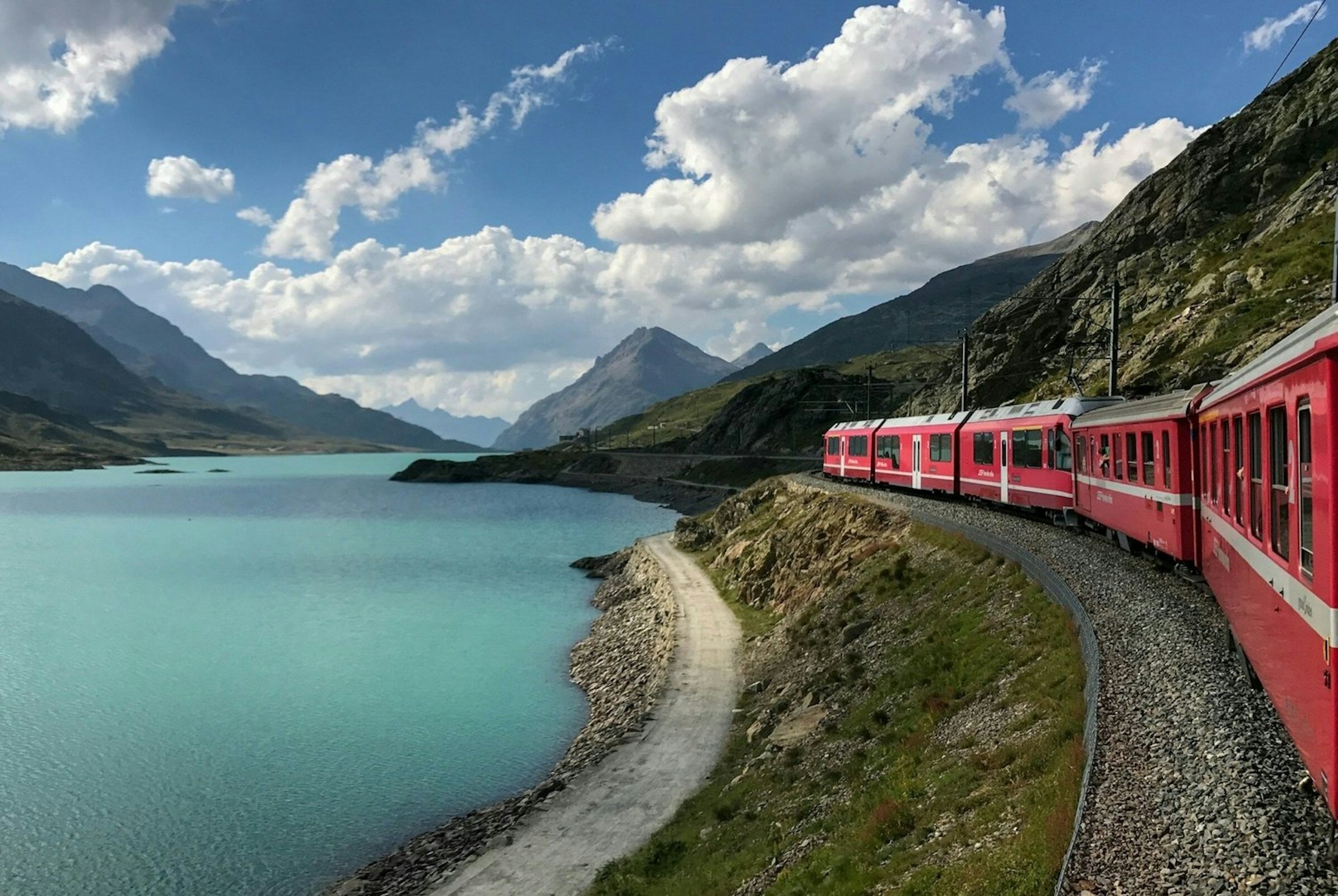
Switzerland is home to some of the most scenic rail journeys in Europe. Learn more about traveling by local train from Chur to Tirano, on the Bernina Express route, find out everything about the regional trains from St. Moritz to Zermatt on the famous Glacier Express Route, or discover how to travel along the Golden Pass Line.
Our price includes all transport, accommodation and a personalized itinerary for your trip. Byway's travel experts are also available on WhatsApp throughout for disruption support and travel tips.
No, flights to Europe aren't included, but all transport and accommodation once you're here is. Short-haul flights are highly carbon-intensive, and traveling around Europe by train, ferry or bus is an easy, enjoyable alternative.
Yes. Different hotel options are available to choose from on the trip page, and any room upgrade requests can be added in the booking form. Our team will then find upgrade options and discuss them with you.
No. If you'd like to leave Europe from a different city, our concierge team can build you a custom one-way trip.
Yes. Prices on our trip pages are shown in your local currency by default, or you can select your preferred currency, including USD, CAD, EUR or CHF, from the dropdown in the top right corner of the trip page. The payment page will always show the price in your chosen currency.
You can generally bring as much luggage as you can carry, as long as it fits in the luggage racks or overhead space. On Eurostar, UK and most European trains, the standard allowance is two large bags and one smaller item, provided you can manage them yourself; let us know in advance if you're planning to bring anything oversized. Since you may need to change stations or walk to hotels, packing light makes the journey more comfortable.
Most European train tickets are digital and sent to you by email. A few, including tickets for Spain, Portugal and some EuroCity trains, require paper tickets, which can be mailed to a hotel on your itinerary.
No, Byway trips are self-guided, not part of a group tour. You'll have on-demand personalized support by WhatsApp, text or phone throughout, so all the planning and booking is done for you, and any disruptions are handled without you having to worry about them.
June to August is the best time to visit Switzerland for hiking, lakes and mountain scenery, with the warmest weather and longest days. December to March is the best time for winter sports, when the Alps are covered in snow. April to June and September to October offer a quieter, more affordable alternative to summer, with mild weather. There are highlights year-round: Basel's Fasnacht carnival fills the streets with masked parades every February, the Alpabzug sees flower-decked cows paraded down from mountain pastures every autumn, and chestnut festivals warm up towns across Ticino as the season turns.
The best things to do in Switzerland include riding the Bernina and Glacier Express routes, hiking in the Alps, and exploring cities like Zúrich, Lucerne and Geneva.
Riding the UNESCO-listed Bernina Express route from Chur to Tirano, crossing 196 bridges and 55 tunnels of Alpine scenery
Taking the Glacier Express between Zermatt and St Moritz, an eight-hour journey past the Matterhorn and Piz Bernina (or travelling on local trains along the same route)
Riding the Treno Gottardo over the Gotthard panorama line, or the Jungfrau Railway and Gornergrat Railway for high-altitude Alpine views
Hiking or skiing in the Swiss Alps, around resorts like Zermatt and Interlaken
Exploring Lucerne's medieval Chapel Bridge and old town
Wine tasting in the Lavaux vineyards, a UNESCO World Heritage Site on Lake Geneva
Riding the GoldenPass Line from Lucerne to Montreux, past lakes and vineyards in Belle Epoque-style carriages
Touring Château de Chillon, a moated medieval castle on the shores of Lake Geneva
Sampling Swiss chocolate and cheese, from Zurich's chocolate workshops to Appenzell's cheese dairies
Watching the thundering waters of the Rhine Falls, Europe's largest waterfall, near Zurich
Switzerland is reachable by train from London via a change of trains in Paris, with connections onward to Zurich, Basel and Geneva. Sleeper train services also connect Switzerland with Amsterdam, Vienna, Rome and Berlin. Within Switzerland, an extensive and very reliable rail network connects all major towns and cities.
Local trains follow the same routes as the Glacier and Bernina Express routes, offering the same panoramic views with more flexibility. They run more frequently, allow hop-on hop-off travel, and require no seat reservation or extra fee, since they're fully covered by the Swiss Travel Pass or Interrail.
Switzerland's most scenic train journeys include the Bernina Express, the Glacier Express route, and the GoldenPass and Gotthard panorama routes.
The UNESCO-listed Bernina Express route runs from Chur to Tirano, crossing 196 bridges and 55 tunnels of uninterrupted Alpine scenery
The Glacier Express route connects Zermatt and St Moritz in around eight hours, winding through the Alps from Piz Bernina to the Matterhorn across 291 bridges and 91 tunnels
The GoldenPass Line runs from Lucerne to Montreux past lakes and vineyards, with Belle Epoque-style carriages on some services
The Treno Gottardo crosses the Gotthard panorama line, with mountain views throughout
The Gornergrat and Jungfrau railways are private mountain railways that climb into the high Alps, making for a perfect day trip among some of the highest and steepest railways in Europe
Yes. Switzerland's trains are among the most punctual and reliable in the world, with clear timetables and multilingual signage at stations. Apps like SBB Mobile, along with passes such as the Swiss Travel Pass and Interrail, make planning and ticketing straightforward for visitors.


