

USA TEST Cinque Terre Express
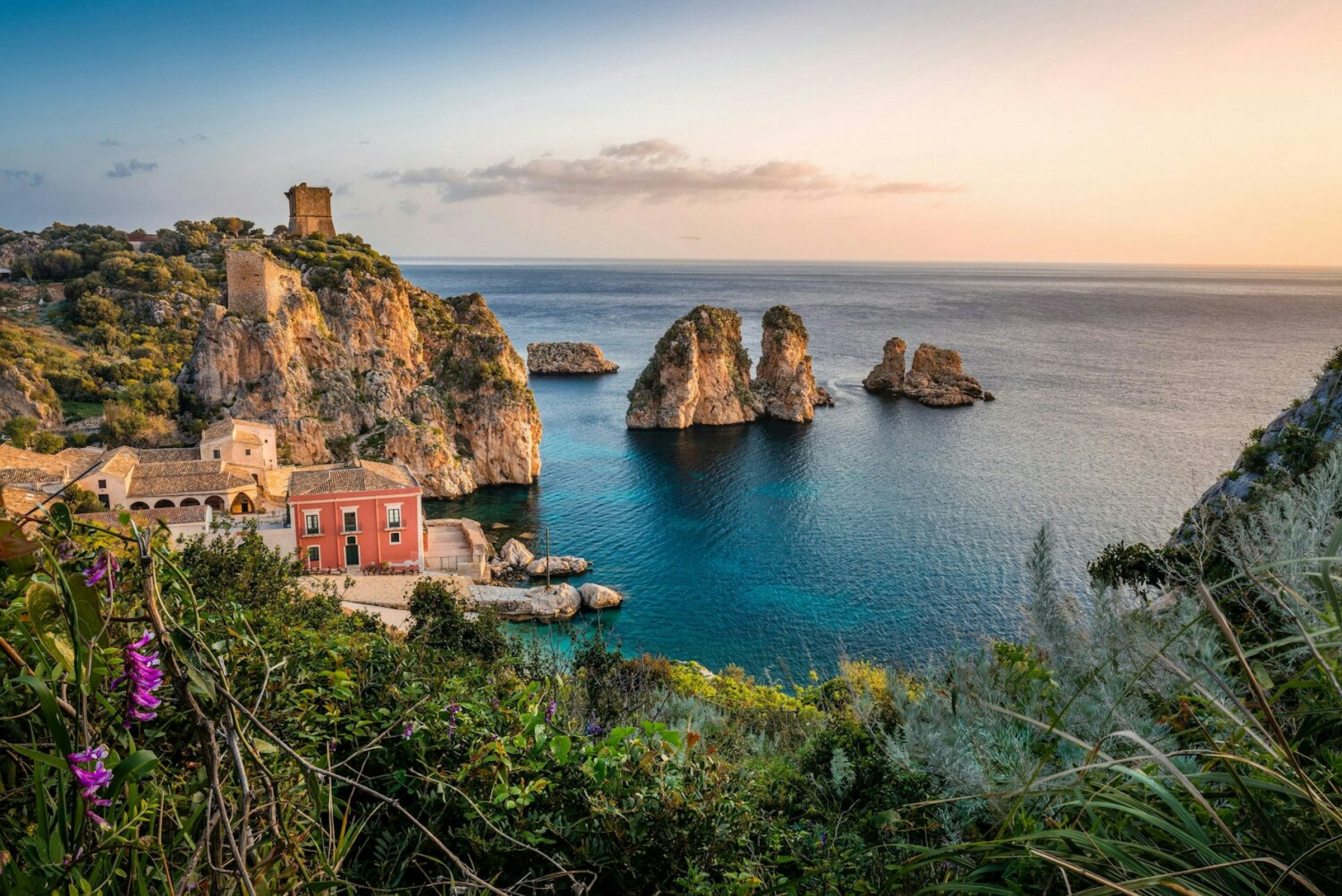
USA TEST Five Ligurian villages are linked by a cliff railway; hop between towns for swims, coastal walks and lunches.
Journal
Powered by two million miles of expertise
April to June or September to October is the best time to visit Italy, with mild, pleasant weather and fewer crowds than peak summer. July and August bring the hottest weather and the busiest cities and coastline. Winters are mild in the south, colder in the north, with skiing in the Dolomites and the Alps from December to March. There are highlights year-round: Venice Carnival fills the canals with elaborate masks and costumes every February, the Palio di Siena horse race electrifies the city's central piazza each July and August, and Alba's white truffle festival draws food lovers to Piedmont every autumn.
The best things to do in Italy include exploring Rome's ancient ruins, wandering Venice's canals, and sampling Italy's regional food and wine.
Exploring Rome's Colosseum, Roman Forum and Vatican City
Touring Tuscany's rolling countryside, hilltop towns and vineyards around Chianti and Montepulciano
Relaxing on the beaches of Puglia, and exploring its whitewashed towns and trulli houses
Sampling regional food and wine, from Bologna's pasta to Piedmont's Barolo
Soaking up Florence's Renaissance art and architecture
Riding the train from Venice or Verona to Bolzano, climbing from the plains of Veneto into the Alps, with onward connections through the Brenner Pass route to Innsbruck and Munich
Travelling along the Bernina Express route from Tirano into Switzerland, renowned for its panoramic mountain views
Taking the Cinque Terre Express, linking Liguria's five colourful coastal villages
Snoozing on the sleeper train to Sicily, with the whole train rolled onto a ferry across the Strait of Messina, continuing to Palermo, Catania and Syracuse
Wandering Matera's Sassi, a UNESCO-listed district of cave dwellings among the oldest continuously inhabited settlements in the world
Discovering the ruins of Pompeii, frozen in time by the eruption of Mount Vesuvius, with the volcano itself open for a summit hike
Direct high-speed trains connect Paris with Turin and Milan, with onward connections across Italy. Other routes run along the French Riviera on the Marseille-Ventimiglia Railway, through Switzerland, or from Germany. International sleeper trains also connect Italy with Vienna, Munich, Salzburg and Brussels. Within Italy, the Intercity Notte runs overnight between Milan, Rome, Naples and Sicily, alongside high-speed and regional daytime services, with buses covering routes not served by rail.
Yes. Major Italian stations and trains are signposted in both Italian and English, and ticket machines offer multiple language options. Conductors may not always speak fluent English, but most travellers find the network easy to navigate, with Byway's WhatsApp support on hand for any confusion, and our guide to navigating train stations covers tips that apply across any journey.
Italy's most scenic train journeys include the route from Venice or Verona to Bolzano through the Brenner Pass, the Bernina Express from Tirano into Switzerland, and the Cinque Terre Express along the Ligurian coast.
The route from Venice or Verona to Bolzano climbs from the plains of Veneto into the Alps, continuing on through the Brenner Pass to Innsbruck and Munich.
The Bernina Express runs from Tirano into Switzerland, renowned worldwide for its panoramic Alpine views.
The Cinque Terre Express links Liguria's five colourful coastal villages, with dramatic sea views between tunnels.
Learn how to book and enjoy an overland trip yourself in 10 clear steps (or book with us, and we’ll handle the lot).


