
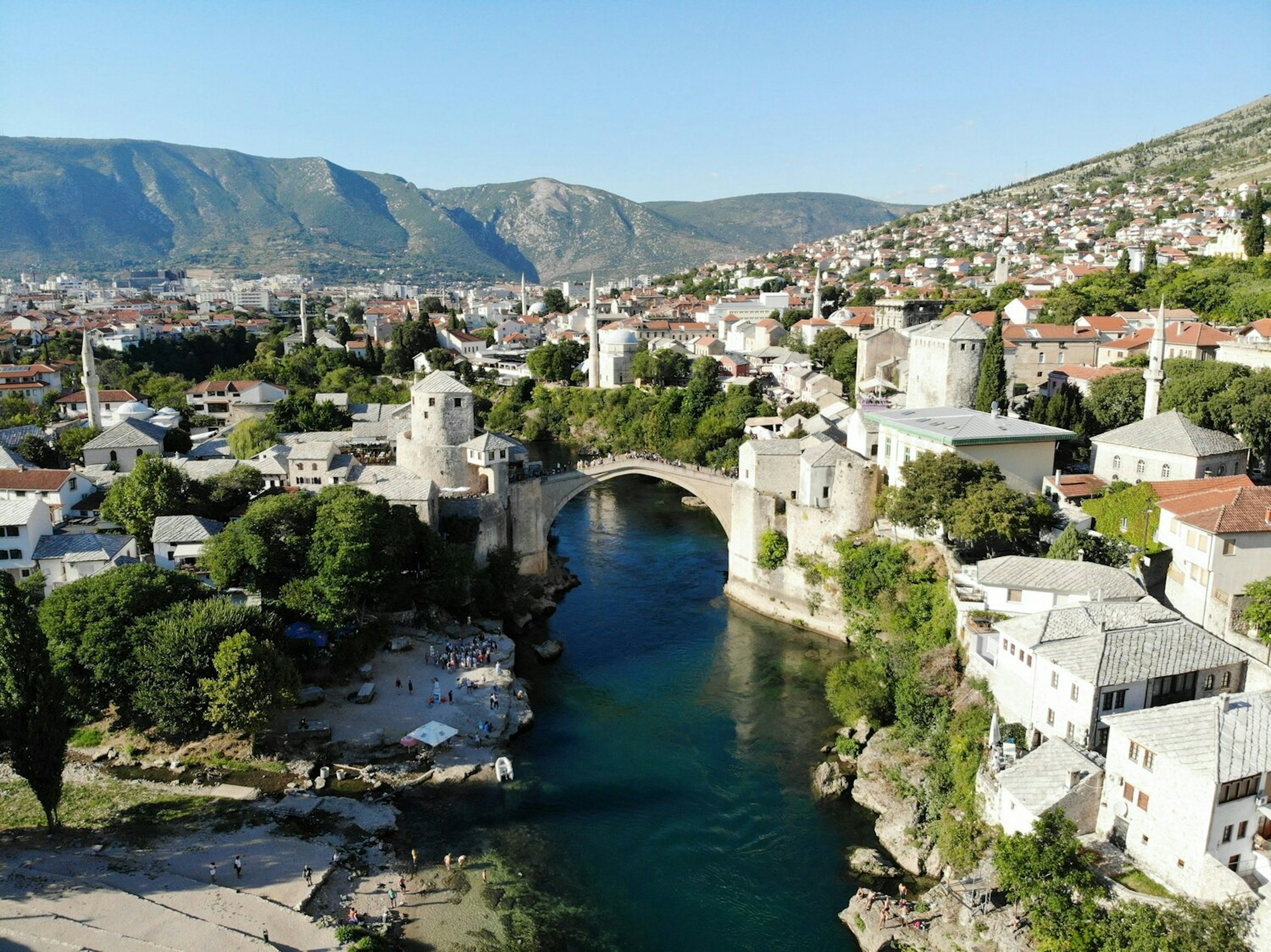

Historic Bosnia and Herzegovina
Follow winding rivers through Bosnia and Herzegovina, exploring Ottoman bridges, hillside towns, and layered history.
Powered by two million miles of expertise
May to September is the best time to visit Bosnia and Herzegovina, with the warmest weather for exploring Sarajevo and Mostar and rafting on the rivers. May, June and September offer a quieter, more affordable alternative to peak summer heat in July and August. December to March is the best time for skiing, with resorts at Bjelašnica and Jahorina. There are highlights year-round: the Sarajevo Film Festival brings international cinema to the capital every August, Mostar's Old Bridge Diving Festival sees divers leap into the Neretva River in a tradition dating back over 450 years, and Baščaršija Nights fills Sarajevo's old town with month-long open-air concerts and theatre every July.
The best things to do in Bosnia and Herzegovina include exploring Sarajevo's old town, crossing Mostar's Old Bridge, and rafting on the Neretva River.
Exploring Sarajevo's Baščaršija old town and Ottoman-era architecture
Crossing Mostar's UNESCO-listed Old Bridge and wandering the old town below it
Rafting or swimming at the Kravica Waterfalls
Skiing at Bjelašnica or Jahorina, both former 1984 Winter Olympics venues
Hiking in the mountains around Sarajevo and the Neretva Valley
Visiting Travnik, a well-preserved Ottoman-era town
Touring Blagaj Tekke, a 16th-century Dervish monastery built into a cliff at the source of the turquoise Buna River
Walking through the Tunnel of Hope, the hand-dug passage that kept Sarajevo connected to the outside world during the 1990s siege
Bosnia and Herzegovina has no year-round international rail connections; a seasonal weekend train runs between Sarajevo and Ploče on the Croatian coast from late June to September, but the rest of the country is reached by bus. Regular bus services connect Sarajevo and Mostar with Zagreb, Split and Dubrovnik in Croatia, as well as with destinations in Serbia. Within Bosnia and Herzegovina, a scenic train also runs between Sarajevo and Mostar.
Our price includes all transport, accommodation and a personalized itinerary for your trip. Byway's travel experts are also available on WhatsApp throughout for disruption support and travel tips.
No, flights to Europe aren't included, but all transport and accommodation once you're here is. Short-haul flights are highly carbon-intensive, and traveling around Europe by train, ferry or bus is an easy, enjoyable alternative.
Yes. Different hotel options are available to choose from on the trip page, and any room upgrade requests can be added in the booking form. Our team will then find upgrade options and discuss them with you.
No. If you'd like to leave Europe from a different city, our concierge team can build you a custom one-way trip.
Yes. Prices on our trip pages are shown in your local currency by default, or you can select your preferred currency, including USD, CAD, EUR or CHF, from the dropdown in the top right corner of the trip page. The payment page will always show the price in your chosen currency.
You can generally bring as much luggage as you can carry, as long as it fits in the luggage racks or overhead space. On Eurostar, UK and most European trains, the standard allowance is two large bags and one smaller item, provided you can manage them yourself; let us know in advance if you're planning to bring anything oversized. Since you may need to change stations or walk to hotels, packing light makes the journey more comfortable.
Most European train tickets are digital and sent to you by email. A few, including tickets for Spain, Portugal and some EuroCity trains, require paper tickets, which can be mailed to a hotel on your itinerary.
No, Byway trips are self-guided, not part of a group tour. You'll have on-demand personalized support by WhatsApp, text or phone throughout, so all the planning and booking is done for you, and any disruptions are handled without you having to worry about them.
Journal
Learn how to book and enjoy an overland trip yourself in 10 clear steps (or book with us, and we’ll handle the lot).

